Backyard Corridors: What Migratory Animals Come through Your Area?
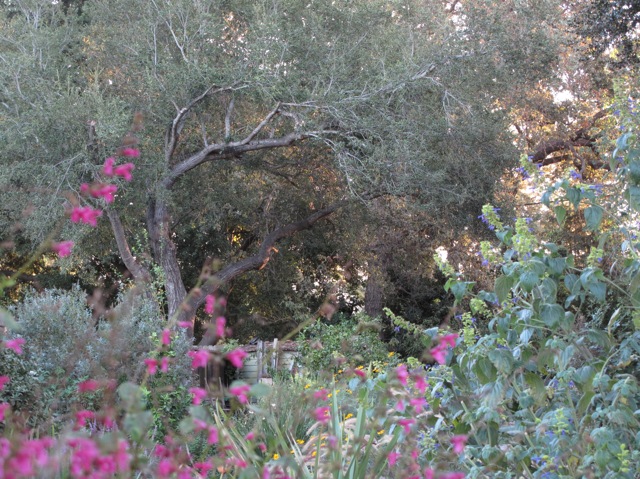
I like to start the day in my backyard hot tub, sipping on a cup of strong coffee and soothing sore muscles. It’s a great way to ease in. There’s also an added benefit. Spending a half hour outside each morning, sitting quietly in one place, provides an opportunity to observe the ever-changing rhythms of nature – among them animal migration.
[Backyard view from the tub. All photos by Jim]
My home is in Ojai, a small town in a small inland valley in Southern California, where most of the migratory animals are birds. Orioles are among the splashier visitors, and therefore hardest to miss. Every spring, when a pair of hooded orioles arrive from their wintering grounds in Mexico for the summer breeding season, I reconnect with the wonders of migration.
Several years ago, the orioles wove a nest under the eave of our house. When they return to Ojai each spring, they fix it up and move back in. I see them gathering their nesting materials and foraging for insects in the oak trees. They also favor a kangaroo paw, whose bright flowers provide them with pollen and share their coloring. Our morning routine is usually the same – me in the hot tub, the orioles in the trees and birdbath. As spring turns to summer, they lay their eggs and birth their young. Then one morning, as suddenly as they arrived, they’re gone.
This kind of seasonal movement from one region or climate to another is known as migration.
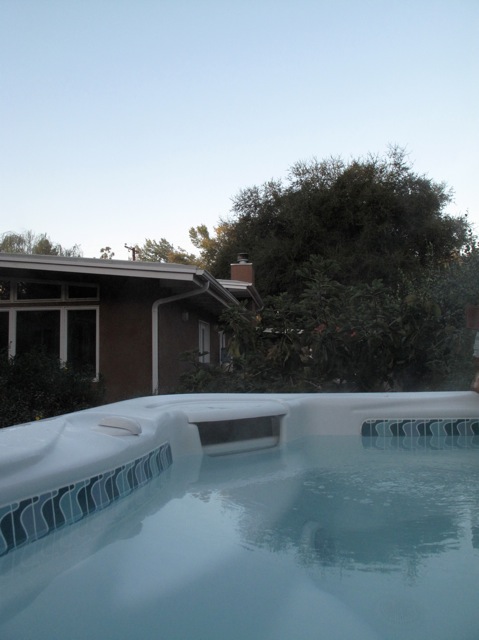
[My cozy observation blind.]
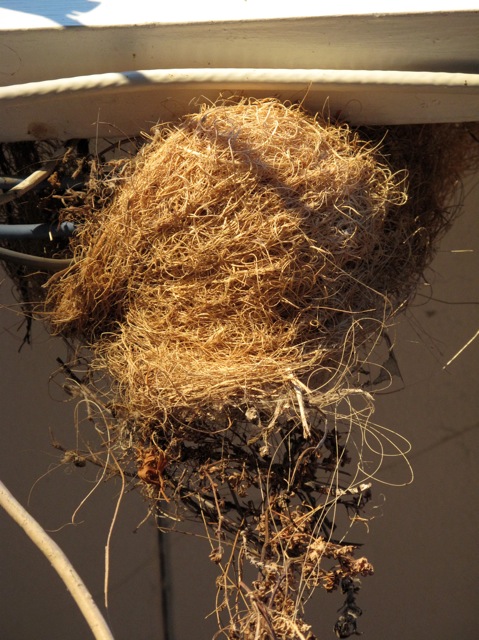
[The orioles vacated their nest in fall to winter in Mexico.]
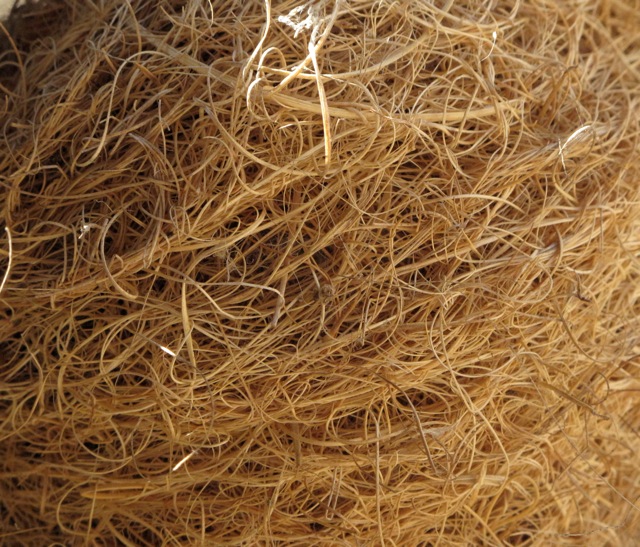
[Tightly woven. Built to last.]
Not all animals are migratory. Those that are, migrate to increase their chances of survival. Some, like the arctic tern, fly thousands of miles to reach warmer climes, while buffalo trod far shorter distances in search of forage. There are animals that travel to escape predators. Many birds migrate for the longer days of summer and better nesting.
Though they migrate for survival, migratory animals of all kinds are having a harder time of it these days, challenged by fences, roads, dams, subdivisions, deforestation, sonar, overfishing… Even wind turbines and solar electricity sites can pose lethal obstacles to the most determined migratory species. To ensure their survival, we must consider their needs.
Orioles and other birds are not the only migratory animals that pass through my part of the world. We also see monarch butterflies meandering between North America and central Mexico. Several species of whales transit the Santa Barbara Channel on their way to calve in Baja lagoons, or stay for several months to devour abundant krill and other crustaceans. There are even a few hundred southern steelhead trout still struggling to make their way between the ocean and the dammed, diverted and badly over-drafted Ventura River watershed.
We see many, many other migratory animals in this temperate part of the world as well. I won’t attempt to list them. Perhaps you can name a few.
What migratory animals come through your area?
Please share your answer, and any stories you may have about those animals, in the comments on our blog, The Cleanest Line, or on Patagonia’s Facebook page. We’d love to hear from you. Thanks to those who have already participated in our Backyard Corridors series. You’re part of a movement that extends from your own backyard, across the country and now around the globe. Rick Ridgeway will be heading to Copenhagen soon to participate in COP15 — Freedom to Roam is going international. Stay tuned for more.