Cleaning Up Chile’s Coast
The South Pacific has a plastic problem. He had a truck.
Editor’s note: In 2022, we launched a series profiling the people of Bureo, our partner that collects and transforms discarded fishing nets from local fishers off the coast of South America and repurposes them into NetPlus® material for our jacket shells, hat brims and the body fabric of our Baggies™ shorts. In this installment, Bureo Chile country manager Christopher “Caco” Clemo shares his story.
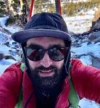
Words by Christopher “Caco” Clemo as told to Andrew O’Reilly
All photos by Jürgen Westermeyer
Part of what got me involved with Bureo was my old truck. It was a boxy 1982 Isuzu NKR that I took from my father’s farm. The truck was always filthy and smelled terrible because of all the old nets I used to haul around in it. It was also really uncomfortable because you sat over the front suspension so any road bumps would send you flying upward, and potholes would just rattle you. But the truck was reliable and did its job, and like those old fishing nets, it served a lot of purposes.
Before I started working with Bureo, I used the truck for several jobs. I would haul around firewood to sell or use my truck to carry fruit for a juice-and-smoothie bar I ran. But after meeting Ben Kneppers and the other guys at Bureo, I knew that the truck could really help them move the old nets. Even so, my work with Bureo really just started as a side job that I was doing to help some friends—because I knew the fishermen and had a truck handy. If you told me eight years ago that I’d be managing a plant and warehouse where, at any given time, 15 to 20 people are working to process old fishing nets into material that can be made into anything from clothing to skateboards, I don’t know if I’d believe it. I honestly didn’t think that it would ever become my career.
Two things have kept me going with Bureo. The first is that we just kept growing and growing. It started out so small—just a few loads of nets here and there—but now we’re processing around 800 tons of nets per year, and we have become an integral part of the fishing community in Concepción, both economically and environmentally. There are now dozens of families that rely on the work Bureo provides. And then there is the pride that comes from doing work that helps your family, your community and your world.
Through this work, I’ve seen real change made in the waters off Chile. Before Bureo, there were nets piling up everywhere and all sorts of trash was washing ashore. The nets had all kinds of things tangled in them: rotting fish, plastic bottles, pieces of old clothing. I also remember seeing footage from an autonomous submarine that showed mayonnaise bottles drifting in the water just 2 meters off the ocean’s floor. It’s impossible to tell if those bottles came from Chile, but we do love mayonnaise in this country. Now people in the fishing community here are coming to us to give us their discarded nets. They know the work we’re doing helps make the ocean a cleaner place, and they know that a cleaner ocean is better for their livelihood and for their families. Once they saw that, it really clicked with them.
When it comes to protecting our waters, Bureo is just one small piece of the puzzle that Chile is trying to solve. Just last year, our legislature passed a bill that banned hard-to-recycle items from being served in restaurants or through delivery services. That means that thousands of pounds of things like plastic plates, cups, straws, cutlery, to-go food containers, lids and stirrers won’t be needlessly tossed away every year. This is a big step forward because so much of that garbage makes its way into our country’s rivers and downstream into the ocean.
It’s also heartening to see that the industrial fishing industry in Chile is taking the lead on reducing its environmental impact. Yes, we still have problems with overfishing and unregulated fishing, but we’re making progress. It’s been a decade since Chile banned bottom trawling, and the country now has more than 270,000 square miles of marine protected areas.
Growing up working on my father’s orchard, I really came to appreciate what nature can give to us, but also its fragility and the need to be a good steward. It’s something my father passed on to me when I was younger, something that inspired me to build my own home in the forest as sustainably as possible, and I want to pass that on to future generations. That’s why I think the work we do is so important. It not only helps protect marine life and Chile’s waters but also sets an example for all Chileans about the need to cherish and protect the amazing resources we’re blessed with in this country.
My old truck finally had to go into retirement, and I got a newer pickup, but I’ll never forget that Isuzu and how it helped get me where I am. Like my truck, our country is also moving forward. I’m very proud of what we’ve been able to accomplish. Efforts like what we’re doing with Bureo and what other groups in Chile are doing can really be examples to people as ways to protect our planet.
Profil de l’auteur(e)