Grown in Vermont – A Patagonia Environmental Internship with Post Oil Solutions
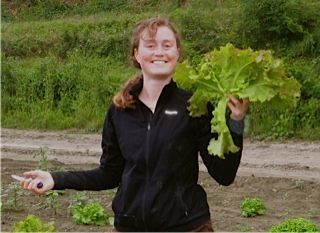
I headed east from Reno to Vermont on August 15, 2011, for a two-week long environmental internship with Post Oil Solutions in southern Vermont. As I flew east over the arid Nevada landscape, I looked forward to the lush vegetation that awaited me in the Green Mountain State. I was quite familiar with Vermont, having grown up there. Once I hit the ground and was heading north on Highway 91 to Bellows Falls, a peaceful feeling came over me as the green landscape and warm, humid air rushed by the car windows.
Vermont has historically been known for spearheading new and innovative social and environmental practices. Act 250 outlaws any big box stores from building in non-existing buildings in order to support small businesses, and billboards are illegal statewide. A group like Post Oil Solutions (POS) fits in well.
I chose to work with POS on the recommendation of family and friends who live in the area. The group’s mission is: “To empower the people of the central Connecticut River Valley bioregion to develop sustainable, collaborative, and socially just communities leading to a self-sufficient, post-petroleum society.”
They do this by providing post-oil education and resources; encouraging a community-based food system and by supporting grassroots initiatives.
My first task was to meet Brattleboro-area food representative Mike Mrowicki. We toured the community food bank, which receives organic produce through donations and through a weekly gleaning project with local farms. The food bank is a warehouse with large refrigerated rooms that store a generous stock of cosmetically seconded produce.
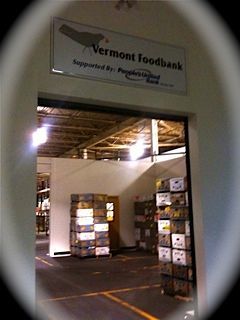
Entrance to the Vermont Food Bank in Brattleboro, Vermont.
My next assignment was to work Tuesday afternoons at the Brattelboro Neighborhood Farmers Market, which is staged on the lawn of Samuel Elliot Apartments. It’s a community-supported agriculture (CSA) share pick-up point for low-income community members, and offers produce at prices significantly lower than you’d find at farmer’s markets open to the wider community. Steve Hed was one of 10 local organic farmers who contributed to the CSA. Also farm manager for the School for International Training, Steve described his farm as “low tech,” meaning all water was hand-carried in buckets from the river and all tilling and planting was performed by hand with non-motorized tools.
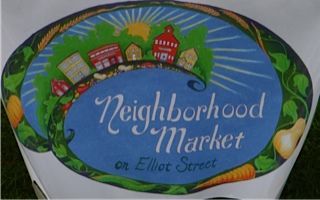
Elliot Street Neighborhood Market Banner, Brattleboro, Vermont.
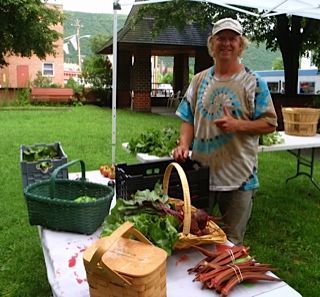
Steve Hed, low-tech farm manager from the School for International Training.
Toward the end of the market when things were winding down, I was invited to help with a free weekly cooking class offered just upstairs in the apartment building. All members of the CSA can participate in the class taught by Megan Greene, who brought several recipes utilizing CSA vegetables. We made Asian coleslaw, honey walnut carrots and potato pancakes from ingredients bought at the farmer’s market.
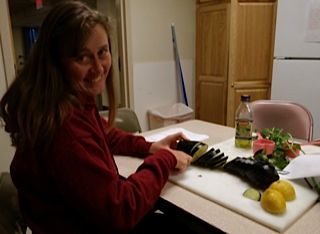
Cadence preps for a free cooking class for CSA members.
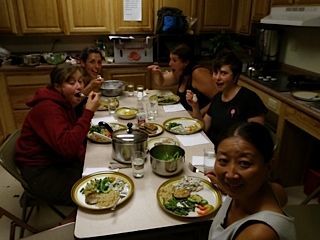
CSA members share an excellent meal they made together.
On Thursday afternoons I cashiered in the POS booth at the farmers market in Townshend, Vermont. I also did survey work to help POS improve its farmer’s market. In a dramatic thunderstorm downpour, I stood on the covered porch of one Townshend business asking customers if they attended the Thursday market, thought the prices were fair, and if they didn’t attend, what would make them more likely to come. It was gratifying to learn that most people I asked did not go to the farmer’s market because they grew their own vegetables.
Two days later, I joined four other women volunteers to glean leftover vegetables from Harlow Farm in Westminster, Vermont, which they donated to the Brattleboro food bank. Harlow Farm is a popular part of the community in southern Vermont’s Connecticut River Valley region. All organic, it has a year-round farm stand and a delicious café.
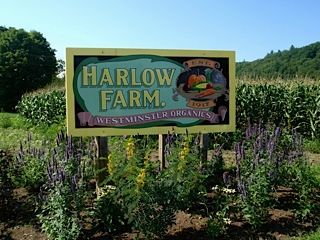
Growing organically at Harlow Farm in Westminster, Vermont.
We worked together throughout the morning and afternoon picking red leaf lettuce and broccoli. There was an extraordinary abundance of perfectly good crops left in the fields. I was glad to be part of an effort to salvage vegetables that would otherwise have been left to rot. I learned from Mike Mrowicki during this process that Paul Harlow, the owner of the farm, usually over-plants by 40 percent. Most farmers over-plant to some degree to assure a return on their efforts.
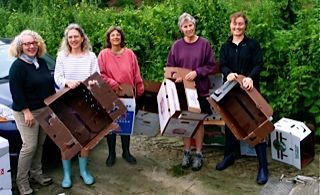
Joan Bowman, Katherine Audette, Jan Ameen, Jane Michaud and Cadence Reed get ready to glean a field.
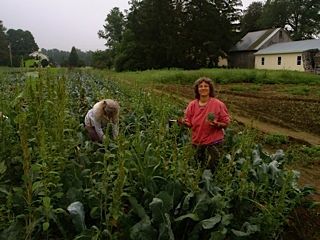
Katherine and Jan harvesting leftover broccoli.
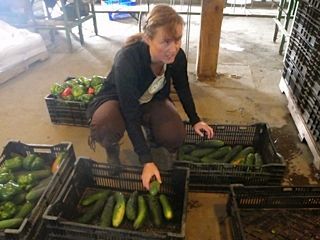
Cadence sorts through a crate of cucumbers.
As my final task, I did a cost comparison of produce for Angela Berkfield, who coordinates the Thursday afternoon CSA Neighborhood Market. I looked at conventional produce from the Price Chopper Supermarket chain, and organic produce from the local CO-OP. The neighborhood market performs a similar analysis four times per season to assure they are offering the lowest possible prices to their low-income CSA members.
My internship opportunity taught me a great deal about sustainable agriculture and about innovative ways to bring locally grown, organic produce to a community at prices affordable to low-income members. I believe every community could benefit from the practices Post Oil Solutions offers southern Vermont. Environmentally focused agricultural practices such as these can help make our world more conscientious and environmentally sustainable. I believe true empowerment for any community comes from the feeling of being self sufficient, and the gratification we collectively and individually feel when we can achieve this.
Profil de l’auteur(e)